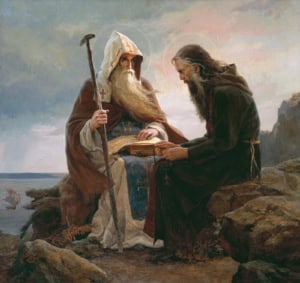
“The greatest work is to be a friend of God.”
St. Anthony the Great
Why have so many men and women throughout history forsaken seemingly everything for the contemplative life, giving up those things that so many of us spend a significant part of our lives pursuing or longing for:
family;
a promising career;
positions of fame or power;
material possessions and wealth;
home and land;
and the possibility of an intimate, shared life with another.
Is it an act of leaving—leaving the world behind—or a form of rejection or repudiation of the culture and society in which they live?
Conversely, is it more a matter of following, or being drawn toward some unknown goal or end?
History bears witness to this sacrificial phenomenon across time, unbounded by geography or religion. The hidden side of the contemplative life—interior by nature—renders the reasons behind such radical decisions elusive.
The Christian contemplative tradition spans from the 3rd-century Desert Fathers and Mothers to modern-day monasteries. In between, there have been—and still are—hermits and cave dwellers, as well as the more austere, silent monasteries.
The trend of monasteries over time has been to shift from austere practices to a more humane lifestyle. When we contemplate from afar the vows that monastics today take upon entering a monastery, we begin to sense the depth of the sacrifice—and all that it entails: celibacy, poverty, and obedience.
Throughout time, people living in the surrounding areas have drawn near to the monasteries with the hopes of learning from the monastics and their practices, in order to deepen their own walk with the Divine. Under this first Waypoint of our contemplative journey, we too draw near. Together we will explore the wisdom teachings and practices that have emerged from the contemplative tradition—reaching back to the Desert Fathers and Mothers, through the hermits and monastics, and extending into the practices that continue to inspire seekers today.
Beneath these traditions lies a shared hope—one that has drawn seekers across centuries into the contemplative life. To explore more deeply what these men and women would encounter, and the gift within, we turn to Waypoint 2 — Silence.
To stay connected and be notified when articles on this theme are released, click Notify Me.